India Pakistan Military Standoff: What You Need to Know
India Pakistan Military Standoff: What You Need to Know The rivalry between India and Pakistan has always been one of the most precarious flashpoints in global geopolitics. The India Pakistan military standoff is not just a bilateral concern—it resonates across international corridors of power, shaping diplomatic dialogues, influencing defense strategies, and unsettling economic forecasts. This face-off, brimming with historical animosity and modern-day strategic complexities, is more than a mere border skirmish. It’s an enduring saga of national identity, territorial sovereignty, and power projection.
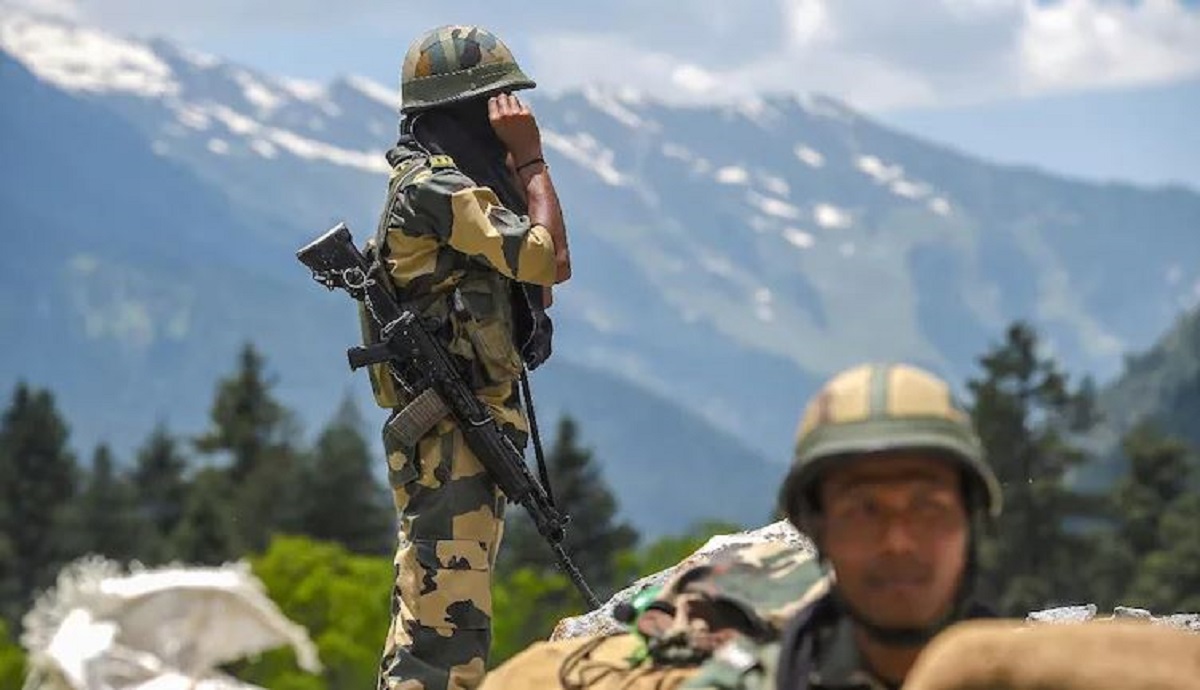
The Genesis of a Protracted Rivalry
The India Pakistan military standoff is deeply rooted in the tumultuous partition of British India in 1947. That seismic event not only redrew maps but also fractured societies, birthing two nations with divergent ideological underpinnings. The ensuing bloodshed and mass migrations carved deep wounds into the collective psyche of both nations.
At the heart of this antagonism lies Kashmir—a region of breathtaking beauty but turbulent politics. Both India and Pakistan claim the region in its entirety, though it is divided by the Line of Control (LoC). This disputed territory has been the ignition point for multiple wars (1947, 1965, 1971, and the Kargil conflict in 1999) and countless smaller skirmishes, each reigniting the embers of mistrust and hostility.
Anatomy of a Military Standoff
An India Pakistan military standoff is not a singular, isolated incident but rather a recurring phenomenon characterized by a series of events that escalate tensions to near-breaking points. These standoffs typically involve:
- Cross-border shelling and artillery exchanges.
- Airspace violations and aerial dogfights.
- Mobilization of troops along borders.
- Diplomatic offensives and war rhetoric.
- International mediation attempts to de-escalate tensions.
Each standoff is marked by its unique trigger—be it a terrorist attack, a border transgression, or provocative political rhetoric. However, the underlying narrative remains constant: a relentless contest of wills between two nuclear-armed neighbors.
Major Military Flashpoints
Kargil Conflict (1999)
One of the most significant episodes in the history of India Pakistan military standoff scenarios was the Kargil conflict. Pakistani soldiers and militants infiltrated Indian positions in the Kargil sector of Jammu and Kashmir. What followed was a fierce military engagement on treacherous mountain terrain. Despite the initial surprise, India successfully repelled the intruders, reclaiming the occupied territory. The conflict underscored the volatility of the LoC and the ever-present risk of escalation into full-scale war.
Operation Parakram (2001-2002)
In response to the December 2001 attack on the Indian Parliament, India launched Operation Parakram, the largest military mobilization since the 1971 war. For ten tense months, nearly a million troops were stationed along the India-Pakistan border. The standoff brought both nations perilously close to war, but intense diplomatic interventions from the US, Russia, and other powers prevented open conflict.
Balakot Airstrike (2019)
Perhaps the most defining moment in recent India Pakistan military standoff history was the Balakot airstrike. Following the Pulwama terrorist attack, in which 40 Indian paramilitary personnel were killed, India conducted airstrikes deep inside Pakistani territory, targeting a Jaish-e-Mohammed training camp. Pakistan retaliated with its own aerial strikes, leading to a dramatic dogfight that saw an Indian pilot captured and later returned. The world watched with bated breath as the crisis teetered on the brink of war.
Strategic Posturing: More Than Just Military Muscle
The India Pakistan military standoff is as much about strategic signaling as it is about actual combat readiness. Both nations utilize military standoffs to:
- Demonstrate resolve and deterrence.
- Influence domestic political narratives.
- Garner international attention to their respective grievances.
- Test military preparedness and technological prowess.
India, with its doctrine of “Cold Start,” aims for swift, punitive strikes to deter Pakistani aggression without escalating into full-scale war. Conversely, Pakistan emphasizes tactical nuclear weapons as a counter to India’s conventional superiority, a posture aimed at deterring any Indian incursion.
The Nuclear Dimension: A Perilous Game of Brinkmanship
What elevates the India Pakistan military standoff from a regional conflict to a global concern is the nuclear dimension. Both countries possess robust nuclear arsenals and have articulated doctrines that leave room for ambiguity. Pakistan’s first-use policy and India’s no-first-use stance create a delicate balance of terror.
However, the risk of miscalculation looms large. Any misstep, misinterpretation, or rogue action could escalate into a nuclear exchange with catastrophic consequences. This precarious equilibrium ensures that international actors remain perpetually engaged in crisis management whenever tensions flare.
The Role of Diplomacy and International Mediation
While military maneuvers capture headlines, the backchannel diplomacy during an India Pakistan military standoff is equally critical. The United States, China, Russia, and even smaller nations like the UAE and Qatar have played behind-the-scenes roles in de-escalating tensions.
Multilateral forums such as the United Nations, the Shanghai Cooperation Organization (SCO), and the Organization of Islamic Cooperation (OIC) also become active arenas for diplomatic engagements during standoffs. These platforms offer avenues for dialogue, even when direct bilateral communication breaks down.
Media Warfare: The Battle for Perception
An often-overlooked aspect of the India Pakistan military standoff is the parallel battle waged in the media. Both nations unleash a barrage of propaganda, disinformation, and psychological operations to sway public opinion and international perception.
From dramatic news anchors to viral social media campaigns, the information war becomes an extension of the military standoff. Nationalistic fervor is stoked, and narratives are crafted to portray the adversary as the aggressor. In the digital age, perception management becomes as crucial as battlefield maneuvers.
Economic Repercussions of Military Tensions
The economic fallout of an India Pakistan military standoff reverberates beyond defense budgets. Heightened tensions impact foreign investments, trade relations, and stock markets. Cross-border trade, already minimal, often comes to a grinding halt. Tourism, especially in sensitive border regions, suffers a sharp decline.
Moreover, global investors view the region with heightened risk aversion during standoffs, impacting economic growth trajectories. Both nations, grappling with developmental challenges, find their progress impeded by the shadow of military brinkmanship.
Civil Society and the Voice of Peace
Amid the drumbeats of war, voices of reason emerge from civil society on both sides. Artists, intellectuals, students, and peace activists consistently advocate for dialogue and de-escalation. Initiatives like “Aman Ki Asha” (Hope for Peace) and people-to-people exchanges serve as vital counterpoints to the hyper-nationalistic rhetoric.
These efforts, though often drowned out by louder political narratives, represent the enduring hope for peaceful coexistence. They remind the world that beneath the layers of political antagonism, there exists a shared cultural and historical heritage longing for reconciliation.
Technological Advancements: Changing the Nature of Standoffs
The advent of cutting-edge military technology has altered the dynamics of the India Pakistan military standoff. Drones, cyber warfare capabilities, precision-guided munitions, and advanced surveillance systems have added new dimensions to conflict scenarios.
Both nations are investing heavily in modernizing their armed forces. India’s procurement of Rafale jets and the development of hypersonic missiles signal its intent to maintain technological superiority. Pakistan, on the other hand, continues to strengthen its missile program and enhance its deterrence capabilities through collaborations with allies like China.
The Future Trajectory: Conflict or Coexistence?
Predicting the future of the India Pakistan military standoff is akin to navigating a labyrinth of uncertainties. However, certain trends and factors could shape the trajectory:
- Diplomatic Normalization: Initiatives such as trade normalization, cultural diplomacy, and sports engagements could act as confidence-building measures.
- Global Pressure: With the international community increasingly intolerant of regional conflicts that threaten global stability, sustained pressure could incentivize peaceful engagements.
- Economic Interdependence: While limited, any increase in economic cooperation could create mutual stakes in maintaining peace.
- Technological Deterrence: The mutually assured destruction paradigm, reinforced by technological advancements, might act as a powerful deterrent against full-scale war.
Yet, the fundamental issues—Kashmir, terrorism, and historical animosity—remain unresolved. Until there is a genuine political will on both sides to address these root causes, the specter of military standoff will continue to haunt the subcontinent.
Conclusion
The India Pakistan military standoff is a manifestation of a complex, multi-layered conflict that intertwines history, ideology, strategic interests, and national pride. Each episode of brinkmanship underscores the fragile nature of peace in South Asia, where a single spark can ignite a conflagration with global repercussions.
Nevertheless, amidst the cacophony of saber-rattling and the choreography of military posturing, there remains a sliver of hope. The repeated cycles of escalation and de-escalation reveal an underlying understanding of the catastrophic costs of war. Dialogue, however intermittent, continues. Civil society voices, however subdued, persist. And the world, with vested interests in regional stability, remains engaged.
In the final analysis, the path forward lies not in outmaneuvering each other militarily, but in outgrowing the historical baggage that perpetuates this perilous rivalry. Only then can the narrative shift from standoff to symbiosis, from confrontation to cooperation. Until that day, the India Pakistan military standoff will remain a defining feature of South Asian geopolitics—an unresolved symphony of power, pride, and the pursuit of peace.